

What can you do when chemotherapy stops working, or a cancer becomes resistant to treatment?
Kliniki.de can help organize an expert review of your medical records by oncology specialists from leading German university clinics, so you can explore treatment options, get second opinions, and access eligible innovative protocols.
Request a treatment planThe doctor or coordinator will answer within 24-48 hours.
When Chemotherapy Stops Working: What to Do Next
When imaging or other clinical evidence shows that cancer is progressing during chemotherapy, the next step is usually a reassessment rather than an assumption that all treatment options are exhausted. The oncology team may confirm progression, review pathology and treatment history, consider whether additional biomarker testing could change treatment, and evaluate another systemic treatment, targeted therapy, immunotherapy, endocrine therapy, a local or regional treatment, or a clinical trial. The appropriate sequence depends on cancer type, molecular characteristics, pattern of progression, previous treatments, general health, and the patient’s goals.

Navigating the Transition When First-Line Therapy Fails
Why does chemotherapy stop working? There is a particular silence that follows the words “the treatment is no longer working.” The scan has been read, the tumor markers have moved in the wrong direction, and the treatment plan that structured the last several months — the appointment calendar, the infusion chair, the side effects endured in the hope of improvement — has been declared insufficient. For patients and their families, it often feels as though the floor has suddenly given way. At two in the morning, families begin searching for answers anywhere they can find them. That search is what brought you here, and you deserve a real answer rather than something that merely resembles one.
The failure of first-line chemotherapy is a clinical milestone, not an endpoint: it marks the point where treatment shifts from being protocol-driven to precision-driven, guided by your tumor’s current biology. What follows is a defined medical pathway — second-line and later-line therapies, molecular retesting, targeted agents, immunotherapy, and clinical trials — that oncologists plan in advance, because resistance is an expected feature of how cancer behaves, not an unforeseen collapse.
Oncology organizes treatment into lines. A first-line regimen is the standard initial treatment approach for a given cancer type and stage. When the disease progresses despite first-line treatment, the second line begins. This scenario is common enough to be addressed in international treatment guidelines. Progression and recurrence are recognized clinical events rather than rare misfortunes; among younger survivors, for instance, 9.5% of patients treated for non-metastatic cancer later experience metastatic recurrence. Knowing that this pathway exists changes the question from “Is there anything left?” to “What specifically comes next for this tumor?”
This guide is built to answer that second question. It covers the vocabulary you need to hold your own in a consultation, the biology driving resistance, the diagnostic tools that reveal new drug targets, the therapies available beyond cytotoxic chemotherapy, and the honest tradeoffs involved in deciding how far to push. It also maps a concrete route for patients who have exhausted what their home system offers: accessing advanced German oncology care, second-opinion consultations with leading university clinic specialists, cutting-edge clinical trials, targeted and immunotherapy options, and streamlined patient logistics via kliniki.de. Knowledge is the antidote to despair here — and the sections below are ordered so you can build it quickly.

Essential Terminology: Understanding Treatment Resistance
Oncology consultations move fast, and the words that matter most are rarely explained twice. These are the terms that will shape every conversation about what happens after a regimen fails.
Acquired Resistance
Acquired resistance describes a tumor that initially shrank or stabilized under chemotherapy but has since developed new genetic changes allowing surviving cells to grow despite continued treatment. This is the most common pattern after months of seemingly successful therapy. It signals that the tumor’s biology has changed — which is precisely why retesting the tumor, rather than simply switching drugs at random, is the logical next move.
Intrinsic Resistance
Intrinsic resistance means the cancer cells were never meaningfully susceptible to a particular drug class, so the tumor fails to respond from the very first cycles. Recognizing intrinsic resistance early can prevent months lost to a regimen that was never going to work, and it usually points toward a mechanistically different agent rather than a higher dose.
Second-Line Therapy
Second-line therapy is the treatment regimen given after the first-line approach stops controlling the disease or becomes intolerable. Guidelines typically define second-, third-, and later-line options in advance for each cancer type, which is why an oncologist can often name the next step immediately after progression is confirmed.
Metastatic Recurrence
Metastatic recurrence is the reappearance of cancer at a site distant from the original one after a period of apparent disease control. It reflects dormant cells that survived initial treatment and later reactivated. The risk is real across all age groups, not only among older patients. Research from the UC Davis Comprehensive Cancer Center shows that 9.5% of young patients diagnosed with non-metastatic disease go on to develop metastatic recurrence.
Progression-Free Survival (PFS)
Progression-free survival is the length of time a patient lives without the disease showing measurable progression on imaging or clinical assessment. PFS is the primary yardstick for judging whether a second-line drug is earning its place, and it is often the first number quoted when a new therapy is proposed.
Tumor Board
A tumor board is a multidisciplinary meeting where oncologists, surgeons, radiologists, pathologists, and molecular specialists jointly review a single case and formulate a treatment recommendation. For complex resistant disease, a tumor board opinion carries more weight than any single specialist’s view because the options being considered span several disciplines at once.
The Biology of Resistance: Why Chemotherapy Stops Working
Patients frequently interpret progression as something they did — a missed dose, too much stress, not enough discipline about diet. The biology says otherwise. Chemotherapy works by damaging cells that divide rapidly, and a tumor containing billions of cells is a population under extreme selective pressure. The drug kills the susceptible cells. Any cell carrying a random mutation that blunts the drug’s effect survives, keeps dividing, and passes that advantage on. Over months, the surviving population can become the dominant one. The tumor visible on the next scan is not the same tumor that was treated at the start; it is its drug-adapted descendant. This is evolution operating on a compressed timescale inside a single body, which is the honest answer to why chemotherapy stops working.
The mechanisms are specific and increasingly well mapped. Some cancer cells overexpress efflux pumps — membrane proteins, notably P-glycoprotein, that physically transport drug molecules back out of the cell before they can reach the nucleus. Others upgrade their DNA repair machinery, undoing the damage platinum agents inflict. Some switch off the apoptosis pathway, so damaged cells that should trigger self-destruction simply continue to live. Others alter the drug target itself, changing a protein’s shape so the drug no longer binds. Each of these is a distinct failure mode, and each points toward a different countermeasure.
Resistance is also environmental, not purely cellular. The tumor microenvironment — the dense stroma, abnormal blood vessels, immune-suppressing signals, and low-oxygen pockets surrounding a mass — can prevent a drug from physically reaching cells at a sufficient concentration. Hypoxic regions slow cell division, and slow-dividing cells are inherently less vulnerable to agents that target replication. Cancer-associated fibroblasts can secrete survival signals that shield nearby tumor cells. A regimen can be pharmacologically correct and still fail because the drug never arrives where it is needed.
Treatment resistance is a biological feature of cancer. It should not be interpreted as evidence that a patient caused treatment failure through stress, diet, lack of discipline, or other personal behavior.
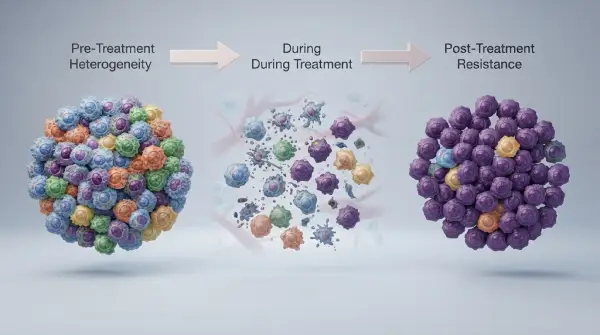
Tumor Heterogeneity
A single tumor is not a uniform mass of identical cells. Different regions carry different mutations, and metastatic deposits in the liver may be genetically distinct from the primary lesion in the lung. This heterogeneity explains the frustrating scan where some lesions shrink while others grow under the same drug. It also explains why a biopsy from one site may not represent the whole disease — and why sampling methods that capture molecular signals from every lesion at once have become central to planning later-line treatment.
Should the Tumor Be Tested Again?
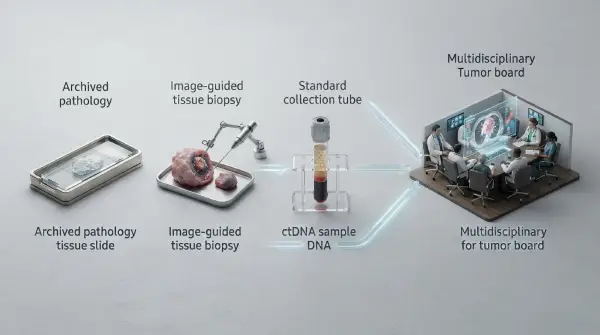
Additional biomarker testing can be useful when a new result could change treatment. The decision depends on cancer type, prior testing, tissue availability and quality, the clinical question, and the treatments that could realistically follow from the result. NCI
Cancer biology can evolve, and not every tumor site necessarily has identical molecular characteristics. An older molecular result may therefore not answer every later treatment question. Depending on the situation, clinicians may consider stored tissue, a new biopsy, or liquid biopsy. NCI
Repeating molecular testing is most useful when its result could change a real treatment decision. It is not automatically required every time chemotherapy stops controlling a cancer.
Advanced Diagnostics: The Role of Liquid Biopsies in 2026
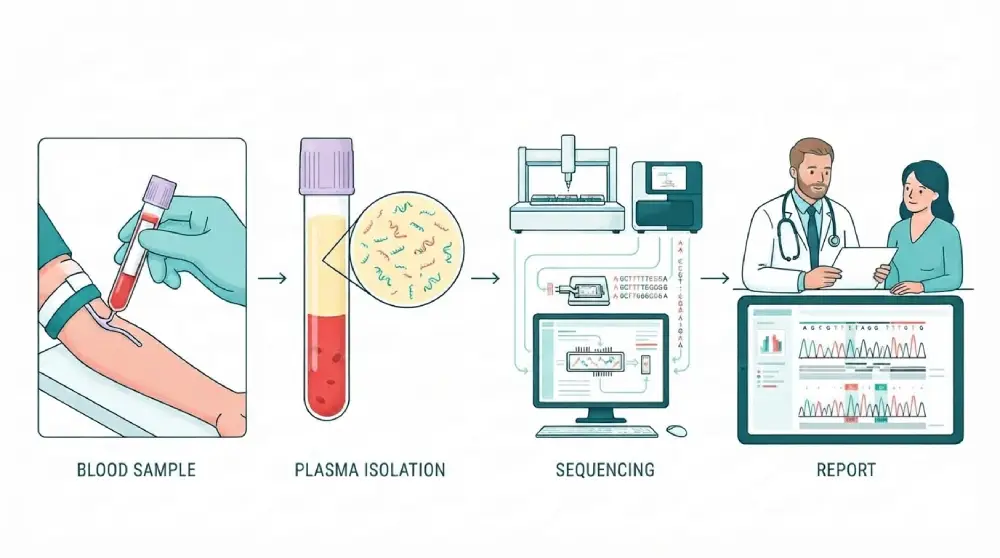
Switching drugs without retesting the tumor is guesswork. When a regimen fails, the clinically useful question is which mechanism defeated it — and answering that requires fresh molecular information, not simply the pathology report generated at diagnosis. A liquid biopsy provides that information from a standard blood draw. Dying tumor cells shed fragments of DNA into the bloodstream, known as circulating tumor DNA (ctDNA). Sequencing those fragments reveals the mutations present across the disease at that time, including resistance mutations that emerged during treatment and were absent at baseline. NCI
| Feature | Traditional Tissue Biopsy | Liquid Biopsy |
|---|---|---|
| Procedure | Surgical or needle sampling, often with sedation | Standard venous blood draw |
| Risk profile | Bleeding, infection, pneumothorax, anesthesia risk | Comparable to routine blood work |
| Sampling scope | One lesion, one region of that lesion | Shed DNA from lesions throughout the body |
| Repeatability | Limited; each repeat carries procedural risk | Can be repeated at intervals to track change |
| Suitability for frail patients | Often ruled out by performance status | Generally feasible regardless of fitness |
| Turnaround | Longer, dependent on scheduling and processing | Typically faster, no procedural scheduling |
| Key limitation | May miss mutations present elsewhere | Requires adequate ctDNA shedding to be informative |
Second-Line and Beyond: Exploring Targeted Therapies
Once a genomic profile identifies what is driving the disease, the therapeutic vocabulary expands well beyond cytotoxic drugs. Classical chemotherapy attacks all rapidly dividing cells, which is why it damages hair follicles, bone marrow, and gut lining alongside tumor. Targeted agents interfere with a specific molecular feature the cancer depends on. This is the operational core of second-line cancer treatment: matching a mechanism to a mutation.
Monoclonal Antibodies
These engineered proteins bind to a specific receptor on the tumor cell surface — HER2 and EGFR are the best-known targets — blocking the growth signal or flagging the cell for immune destruction. They are typically infused and often combined with chemotherapy, where they can help restore sensitivity to a regimen that had begun to fail.
Tyrosine Kinase Inhibitors
Kinases are the enzymes that relay growth signals inside the cell. Small-molecule inhibitors, usually taken as daily oral tablets, shut down a specific mutated kinase such as ALK, ROS1, BRAF, or EGFR. Newer generations of these drugs were designed specifically to overcome known resistance mutations to earlier generations — resistance to a targeted drug is often treatable with a better targeted drug.
Checkpoint Inhibitors
Many tumors survive by suppressing the activity of the T cells sent to kill them, using signals such as PD-L1. Checkpoint inhibitors release that brake, allowing the immune system to recognize the tumor again. Response rates vary widely by cancer type and biomarker status, but responses, when they occur, can be unusually durable.
Immunotherapy is not a universal next step after chemotherapy. Its role depends on the cancer type, treatment history, biomarkers, and clinical situation.
Antibody-Drug Conjugates
These link a cytotoxic payload to a targeting antibody, delivering a concentrated dose of chemotherapy directly to cells carrying a chosen surface marker. The design allows higher intracellular drug levels with less systemic exposure, and several have shown activity in tumors already resistant to the same drug class given conventionally.
PARP Inhibitors and Synthetic-Lethality Agents
In tumors with defective DNA repair, such as BRCA-mutated cancers, blocking the backup repair pathway causes lethal damage accumulation in cancer cells while sparing healthy ones with intact repair machinery.
Maintenance Therapy
After a later-line regimen achieves control, treatment often steps down to a single better-tolerated agent given continuously. The goal shifts from shrinking disease to holding it still, extending progression-free time without the cumulative toxicity of full-intensity therapy.
Regional Chemotherapy: An Alternative When Systemic Treatment Fails
Regional chemotherapy delivers anticancer drugs to a defined anatomical region — a limb, the liver, or the peritoneal cavity — in selected clinical scenarios. Techniques include isolated limb perfusion (ILP), hepatic artery infusion (HAI), and intraperitoneal chemotherapy approaches including HIPEC. They have specific indications and should not be presented as general treatments for chemotherapy-resistant cancer.
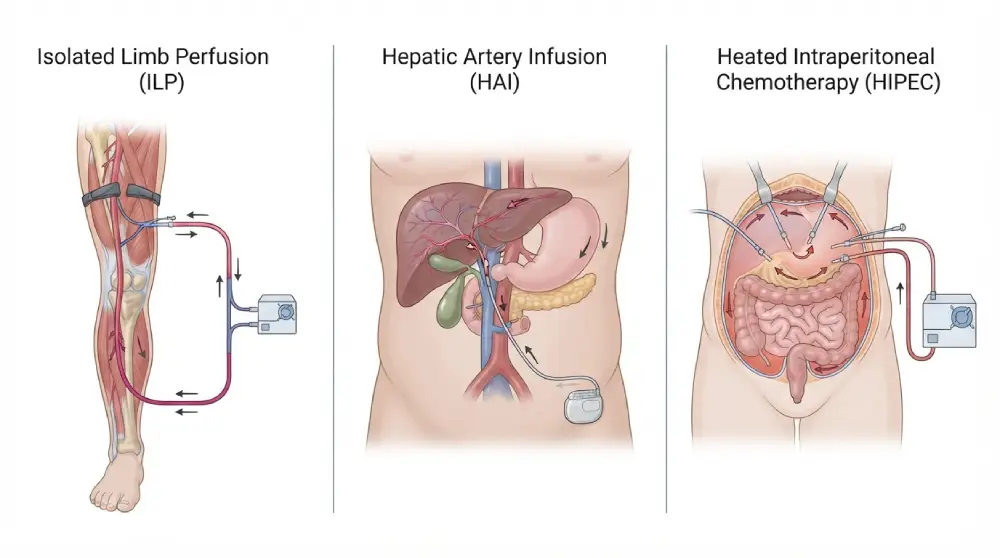
Related clinical resource: regional chemotherapy clinic information on Kliniki.de.
When systemic chemotherapy ceases to be effective, regional chemotherapy offers a promising alternative by targeting the tumor directly. Regional chemotherapy involves delivering high concentrations of anticancer drugs directly to the tumor site, minimizing systemic side effects. To achieve this focused delivery, techniques such as isolated regional perfusion and intra-arterial chemotherapy are employed.
Isolated Limb Perfusion (ILP)
Isolated limb perfusion (ILP) can be considered in selected patients with locally advanced soft-tissue sarcomas of an extremity, particularly when disease extent threatens the feasibility of limb-sparing surgery. In a multicenter European series of 186 patients treated with TNF-alpha plus melphalan, a major tumor response was reported in 82% of patients, and limb salvage was achieved in 82% at a median follow-up of 22 months. The clinical response distribution was 18% complete response, 57% partial response, 22% stable disease, and 3% progressive disease. Eggermont et al., Ann Surg. 1996; PubMed
Hepatic Artery Infusion (HAI)
Hepatic artery infusion (HAI) has been studied in selected patients with liver-dominant colorectal metastases. In a prospective randomized trial of floxuridine-based HAI for unresectable colorectal liver metastases, median survival was 15 months with HAI versus 11 months in the control group; 1-year survival was 64% versus 44%, and 2-year survival was 23% versus 13%. Rougier et al., J Clin Oncol. 1992; PubMed Allen-Mersh et al., Lancet. 1994; PubMed
HIPEC
HIPEC may be considered only in selected clinical scenarios, usually as part of a specialist cytoreductive-surgery strategy. In the randomized phase III HIPECOVA trial of patients with ovarian peritoneal metastases undergoing cytoreductive surgery, median overall survival was 48 months with HIPEC versus 46 months without HIPEC (p = 0.579); the study reported a 5-year overall survival of 47.2% versus 34.5%, and a 3-year recurrence-free survival of 47.5% versus 21.3% in the HIPEC and control groups, respectively. Villarejo Campos et al., HIPECOVA, Curr Oncol. 2024; PubMed
The German Advantage: Accessing Innovative Oncology in Europe
For patients whose domestic options are exhausted, geography becomes a treatment variable. Germany is home to a high density of comprehensive cancer centers, university hospitals, and research institutes within short distances of one another, and its system is structured to absorb international referrals rather than treat them as exceptions. Related: Kliniki.de’s overview of cancer treatment in Germany. DKTK
Modern Technology
German university oncology departments maintain infrastructure that is rarely available outside major research hubs. Particle therapy centers deliver proton and carbon ion radiation, which deposits its energy at a precisely controlled tissue depth and spares surrounding structures more effectively than conventional photon beams. This is particularly relevant for tumors adjacent to the spinal cord, the base of the skull, or previously irradiated fields where re-treatment would otherwise be impossible. Molecular pathology laboratories run comprehensive next-generation sequencing panels in-house, and interventional radiology programs offer regional approaches such as chemoembolization, radioembolization, and thermal ablation for liver-dominant metastatic disease.
Expertise
The defining feature is procedural rather than technological: the multidisciplinary tumor board. Before a recommendation is issued, a case is reviewed jointly by medical oncologists, surgeons, radiation oncologists, pathologists, radiologists, and molecular tumor board specialists who debate the options together. This matters most in cases of resistant disease with an unusual molecular profile, and it is exactly what distinguishes a considered plan from a default one. DKG
Accessibility
Germany runs one of Europe’s largest clinical trial portfolios, with early-phase studies concentrated in academic centers and a regulatory environment that supports compassionate-use access to investigational agents under defined conditions. International patients are admitted on a self-pay or insurer-funded basis without a residency requirement. Our platform Kliniki.de exists to close that gap, allowing patients to compare clinic specializations and request second-opinion consultations with distinguished university clinic specialists before committing to travel.
Clinical Trials: When Standard Protocols Are Not Enough
A clinical trial is not what happens when medicine has run out of ideas. It is where future standards of care are being tested, and for a patient with a rare resistance mutation, a trial may offer the only possible drug designed for that specific target. Timing matters enormously: eligibility criteria almost always require adequate organ function and a reasonable performance status, which means the enrollment window narrows with every month of decline. Trials should be investigated while other treatment options are still available, not after everything else has been tried.
How to evaluate clinical trials for resistant cancer:
- Confirm your molecular profile first: Most modern trials screen by biomarker. Without current genomic data from tissue or ctDNA, you cannot reliably determine which studies you qualify for, and screening failures waste weeks.
- Search the right registries: ClinicalTrials.gov covers studies worldwide, and the EU Clinical Trials Information System (CTIS) lists European studies. Search by tumor type, mutation, and line of therapy rather than by drug name.
- Read the phase honestly: Phase I establishes safe dosing; phase II assesses activity in a specific tumor type; phase III compares the new approach against current standard care.
- Ask about the control arm and crossover: If randomization means a chance of receiving standard therapy, ask whether crossover to the experimental arm is permitted on progression.
- Clarify financial logistics: Trial sponsors typically cover the investigational drug and protocol-required testing. Travel, accommodation, and standard-of-care components may not be covered.
- Ask about the site’s experience with the protocol: A center that has enrolled many patients usually has greater practical experience managing protocol-specific toxicities.
Prognosis and Life Expectancy: Understanding the Statistics
At some point the question gets asked directly, usually by a family member rather than the patient: how long. The honest answer begins with what survival statistics actually are. A median survival figure describes the midpoint of a population — half of a historical cohort lived longer, and half did not. It was calculated from patients diagnosed years before you, treated with the drugs available then, with a range of ages, comorbidities, as well as molecular profiles bearing no necessary resemblance to yours. Survival curves for advanced cancer typically have a long right tail, meaning a substantial fraction of patients live substantially beyond the median.
What Is Performance Status?
Performance status is the concrete measure of how much of the day a person spends active versus in bed. It is among the strongest predictors of both survival and tolerance of further treatment. In a study of 237 adults with advanced non-small-cell lung cancer receiving immune checkpoint inhibitors, median overall survival was 4.5 months among patients with performance status (PS) ≥2 versus 14.3 months among those with PS 0–1 (hazard ratio 2.5; P <0.0001). Petrillo et al., 2020
What Is RECIST 1.1?
Oncologists use RECIST 1.1 — Response Evaluation Criteria in Solid Tumors — a standardized framework that assesses target lesions on imaging and classifies results into complete response, partial response, stable disease, or progressive disease. Stable disease is a legitimate success in later-line treatment; holding a tumor still is clinically valuable even when shrinkage does not occur.
Palliative Care: Enhancing Quality of Life Alongside Treatment
The word palliative is widely misheard as terminal, and that confusion costs patients real benefit. Palliative care is a medical specialty devoted to controlling symptoms and preserving function. It is delivered alongside active treatment. Framing the choice as ‘palliative care vs active treatment’ is a false dichotomy — in modern oncology, the two run in parallel. NCI
Evidence from patients with advanced cancer illustrates why quality palliative care matters: In a randomized trial of 144 patients, early integrated palliative care improved quality-of-life measures at 18 weeks and coping outcomes over 24 weeks. Secondary analyses demonstrated lower depression prevalence at 24 weeks (14.7% versus 39.1%; P=0.036) and higher 2-year survival among patients receiving high-quality early supportive care. Kang et al., 2024 Kang et al., 2025
Making the Decision: When to Stop Active Treatment
Every new line of therapy involves a calculation that only the patient can make: what the treatment costs in symptoms, hospital time, and functional capacity, weighed against what it realistically offers in disease control. Later-line regimens generally deliver diminishing response rates and increasing toxicity. That does not make them wrong — it makes the calculation explicit rather than automatic.
Five questions to ask before starting a new line of therapy:
- What is the realistic goal here — tumor shrinkage, stabilization, or symptom relief?
- How will we know whether it is working, and when?
- What are the likely side effects, and how will they affect my daily life?
- What happens if I choose supportive care alone instead?
- Does this treatment preclude anything later, including trial eligibility?
Choosing to stop anticancer treatment is a medical decision, made on the same evidence as the decision to start one. When the body is no longer able to recover between cycles, continuing is not perseverance and stopping is not surrender. Patients who transition to full supportive care at the right time frequently feel better and spend more time at home.
How International Patients Can Seek a German Oncology Second Opinion
- Assemble the medical file first: Pathology reports including original histology, genomic testing results, imaging files in DICOM format, complete treatment history, and recent blood work.
- Use a coordinator or specialized platform: Platforms like Kliniki.de’s Second Opinion program connect patients with subspecialists, secure estimates, arrange visa letters, and handle translation.
- Compare before you commit: Request a remote second-opinion consultation with a university clinic specialist before arranging travel to determine whether specialized treatment options may apply.
Related Kliniki.de resources: Second Opinion, cancer treatment in Munich, and the broader cancer-treatment overview.